Colorado Springs & beyond
Baseball & softball for every kid, every level
From free rec leagues to $4,000+ travel programs — a parent's guide to finding the right fit, from Colorado Springs to Denver, Fort Collins, and the Western Slope.
From free rec leagues to $4,000+ travel programs — a parent's guide to finding the right fit, from Colorado Springs to Denver, Fort Collins, and the Western Slope.
The next tryouts on the calendar, statewide.
Hi there — my name is Jacob Larkee, and I built this site after experiencing firsthand how hard it is to navigate youth baseball and softball in Colorado Springs. What's the difference between rec ball, Little League, and travel ball? Which organizations are holding tryouts, and when? Which level is right for my kid? Facebook helps, but it gets overwhelming fast.
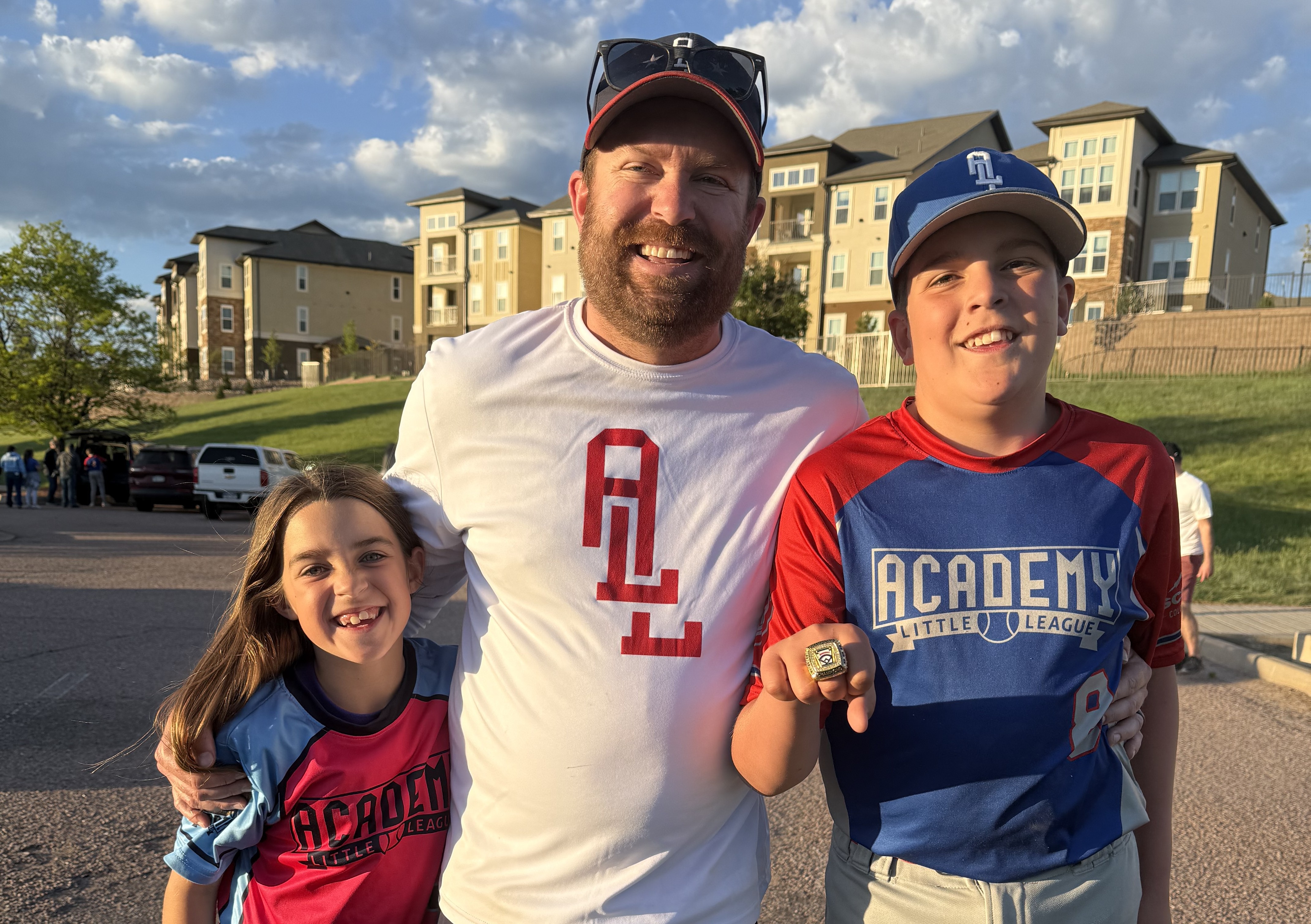
My son started playing in 2022 with Academy Little League. Since 2023 he's played some form of travel baseball every year — summer teams, part-time travel teams, and programs that compete out of state. Along the way I've learned a lot, made plenty of mistakes, and wished more than once that someone had put all of this information in one place.
That's what this site is. What started as a Colorado Springs-only resource has grown into a statewide guide — covering Denver metro, Northern Colorado, and the Western Slope too. My goal is a single resource where Colorado families can understand the landscape, compare their options, find tryout dates, and make a confident decision about what's right for their player — without spending hours digging through Facebook groups and individual team websites.
Three tools to help your family find the right fit — without the Facebook rabbit hole.
Travel and select baseball and softball organizations across Colorado — with costs, age groups, contacts, and tryout info.
Browse organizations →Parks & Rec, YMCA, Little League, and other community programs — lower cost, lower commitment, great for players just starting out.
Browse organizations & leagues →Every upcoming tryout in the area on one page. Filter by age group and sport — no hunting through individual team websites.
See upcoming tryouts →This site is community-maintained. If something is wrong, outdated, or missing — coaches, parents, and league admins can submit updates.
Submit a listing →Tips, guides, and local insight — from what USSSA means to how to pick the right team for your kid.
Read the blog →Not all youth baseball and softball is the same — here's what sets each level apart.
Parks & Rec and the YMCA are the lowest entry point. Low registration fees, beginner-friendly, and a great starting point if you're not sure yet whether baseball or softball is the right fit. Colorado Springs Parks & Rec even has a grant program where families can register for free.
Practices and games are local. Playing time is roughly equal. All coaches are volunteers.
Similar to rec but generally a step up in competition. Many players do Little League and travel ball at the same time. Expect 2–3 practices per week in the preseason and at least 2 games per week during the season.
The big difference is the postseason — every league can form All-Star teams that compete at the district, state, and regional level. The Little League World Series you watch on ESPN every August? That's the top of this pyramid.
The most competitive, highest cost, and highest commitment level — and also the broadest. Players attend tryouts and earn their roster spot. Within travel ball there are many levels, from teams that stay in state to programs that compete nationally year-round.
Practices can run 2–4x per week. Coaches may be paid. Costs vary widely based on tournaments, travel, facilities, and equipment.
Colorado Springs is unique in having CSB — a privately owned league that offers baseball in summer and fall. CSB has a mix of rec-level players and travel teams. Travel teams often use CSB to get reps between tournaments. It's a great middle ground: more competition than pure rec, less commitment than full travel ball.
All-in estimates for the Colorado Springs area. Rec and Little League levels often have shared team gear — bats, helmets, catcher's equipment — that limits out-of-pocket costs for families.
| Type | Season fees | Gear / uniform | Travel (est.) | Total range |
|---|---|---|---|---|
| T-ball / Rookie rec | $0–$120 | $50–$100 | None | $0–$220 |
| Little League / rec | $100–$200 | $100–$200 | Minimal | $200–$400 |
| Travel — local / in-state | $800–$1,500 | $200–$400 | $300–$600 | $1,300–$2,500 |
| Travel — regional | $1,500–$2,500 | $300–$500 | $800–$1,500 | $2,600–$4,500 |
| Elite / showcase | $2,500–$4,000+ | $400–$700 | $1,500+ | $4,500–$7,000+ |
Every parent signs their kid up with the right intentions. The problem is most of us don't fully understand what we're getting into — I certainly didn't when we started.
Ask any young player their goal and they'll probably say they want to go pro. It's easy as a parent to chase the best coaching and the highest level. But kids will never reach their potential if they aren't having fun. Before you research teams, have an honest family conversation: Does your player thrive in a highly competitive, intense environment — or a more relaxed one? Are they 8 years old, or 14 and about to enter high school? The answers should drive everything else.
In tournaments, coaches can choose to bat everyone, bat 10, or bat 9. Each coach manages differently depending on their goals. This is one of the most important things to understand before signing — and one of the least often discussed upfront. Ask directly, and get a real answer, not a recruiting answer.
In Colorado Springs, the vast majority of travel tournaments are hosted in Denver. Many travel teams make that drive at least every other weekend during the season. Some teams never stop practicing. Make sure your family's schedule and budget can handle the reality before you're locked in.
Talk to current and former families — not just the coach. Look at Facebook groups. Ask around at Little League games. The things coaches don't mention in recruiting conversations are usually the things you most need to know. A good organization will welcome the scrutiny.
Travel ball has many levels — from AA Silver (lowest) to Majors (highest). Make a realistic assessment of where your player should compete to grow and succeed. A kid sitting the bench on an elite team develops less than one playing every inning on a mid-tier team. And be aware: coaches who need to fill a roster spot may invite a player who isn't quite ready — it's worth asking directly how competitive the team expects to be.
This guide started in Colorado Springs, and it's still the region we know best — here's what makes the Pikes Peak area unique. We've since expanded statewide, so use Browse to find organizations and leagues anywhere in Colorado.
Colorado Springs has a fast-growing youth baseball and softball community. For rec ball, Parks & Rec and the YMCA are the go-to options for summer. Their seasons typically run from late May or early June through the end of July.
For Little League, there are four active leagues in Colorado Springs — Academy Little League, Colorado Springs Little League, and two others — each with over 400 players every spring. All four are part of Little League District 5 and compete against other District 5 leagues in the District Tournament. (Denver-metro and Boulder-area leagues fall under District 2, and Western Slope leagues under District 1.) Currently, Academy Little League and Colorado Springs Little League both offer a fall season in addition to the traditional spring season.
For travel ball, the three main governing bodies for tournaments are USSSA, Triple Crown, and CABA. The catch for Colorado Springs families: the vast majority of tournaments are hosted in the Denver area. Expect to make that drive at least every other weekend during the season.
Fields and facilities are where Colorado Springs is struggling most. In the central and south parts of the city there are established complexes — Skyview, Leon Young, and El Pomar — but on the north side, leagues primarily use school fields. Indoor training facilities are limited: the Springs Athletic Center has one full-sized indoor field, and there are a DBat, a D1, and a handful of smaller facilities scattered around the city.
Something unique to Colorado Springs: Colorado Springs Baseball (CSB) is a privately owned local league offering baseball in both summer and fall. It fills a gap between rec ball and full travel ball — a good option for families who want more competition than rec offers but aren't ready for the full travel commitment.
The jargon you'll hear at every tryout and tournament — decoded.
Costs change, teams fold, new orgs start up. If something is wrong or missing, let us know — no account needed.